


Geo Tracker - Phone Locator
3.45.00 Reviews
App Specs
- Version
- 1.0.8
- Updated On
- License
- Free
- Downloads
- 500,000+
- Developer
- CA CA COMPANY LIMITED
- Categories
- Maps & Navigation
- Platform
- Android
Screenshots
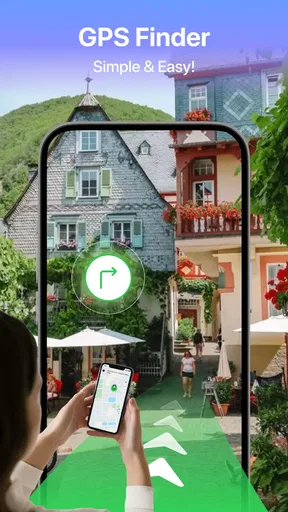
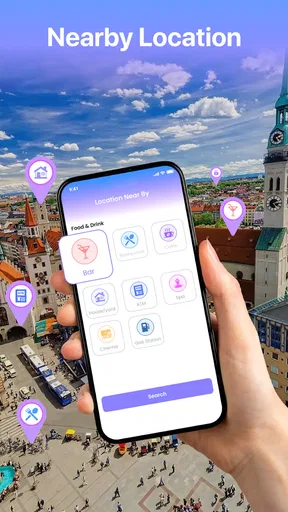
 Analysis by AppCompare
When I’m choosing a location app, I first ask what I actually need it to do: help me recover a misplaced phone, share whereabouts with people I trust, or keep an eye on a place during a routine. Geo Tracker - Phone Locator is aimed at that practical mix of locating and live location sharing. It is a free Maps & Navigation app from CA CA COMPANY LIMITED, and its stated focus makes it worth considering if you want a dedicated tracker rather than a full navigation suite.
There is an important distinction between being free to install and knowing the full cost of every feature. The app is free, with in-app purchases listed at $9.99 per item. I would treat that as a reason to check what an optional purchase covers before committing, rather than assuming every tool is included at no cost. The price point makes trying the basic experience relatively low-risk, but paid value depends on whether a particular extra solves a problem you actually have.
What the free starting point can tell you
For a first-time user, the sensible approach is to begin with the free access and test the everyday task that brought you here. If you mainly want to locate a phone or share a live position, focus on whether the app fits the people and devices you need to coordinate. Don’t buy an add-on just because it sounds useful in theory; first establish whether the core workflow is convenient enough to become part of your routine.
That matters especially for a family or group. A location tool is only useful when the people involved understand how to use it and are comfortable sharing their whereabouts. Before relying on it, agree who can see a location and when tracking is appropriate. A clear, limited arrangement is more useful than turning on sharing without discussing expectations.
Getting Started with Geo Tracker
The setup process for Geo Tracker - Phone Locator is as smooth as butter. You can snag it from either the Google Play Store or the Apple App Store. Once downloaded, the app guides you through a straightforward installation and setup process. No PhD in tech needed here! Just follow the on-screen instructions, and you’re good to go.
What I found super handy was the initial tutorial. It quickly walks you through all the features without drowning you in technical jargon. It's like having a tech-savvy friend on hand to guide you. The app does require some permissions, like access to your location and contacts, but that's pretty standard fare for locator apps.
Features to Love
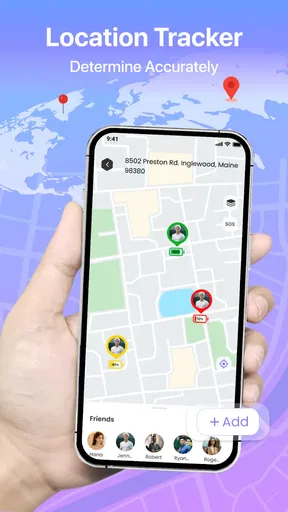
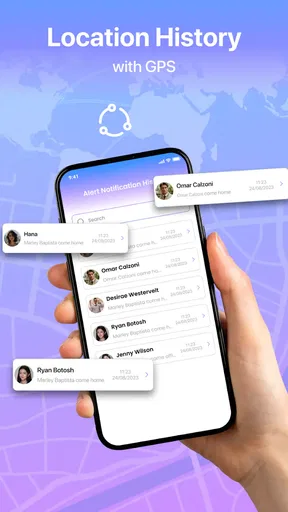
Let’s dive into what makes the app stand out. First off, the real-time location tracking is spot on. Whether I was just in the next room or miles away, the app pinpointed my phone's location with impressive accuracy. It also offers a location history feature, which can be a lifesaver if you’re retracing your steps.
Worth Reading Before You Choose

EA SPORTS FC Mobile 26 Is a Bigger Football Game, but It Takes Time

Flipboard Shows What News Apps Must Do Beyond the Feed

Switching to Android Auto Means Rethinking Your Driving Routine

Google Calendar Makes a Crowded Week Easier to Manage

Ludo King Makes the Most of the Minutes Between Plans

Baby Panda World Brings Quick Play to Modern Phones, but Its Game Library Feels Busy
Another feature I found nifty is the geofencing option. You can set up specific areas on the map, and the app will notify you whenever the phone enters or exits these zones. It's perfect for keeping tabs on kids or ensuring your phone stays within safe boundaries.
The app's interface is intuitive and user-friendly. You don’t have to wade through endless menus to find what you’re looking for. Everything is neatly organized and easy to access, which is a huge plus in my book.
Performance and Reliability
Now, let’s talk performance. It runs like a dream. In my testing, it consistently delivered quick and accurate location updates. The app didn’t drain my battery as much as I feared, which is a common issue with location services. It seems the developers have done a stellar job optimizing it for efficiency.
I also appreciated the app's reliability. Whether I was in a densely populated city or out in the sticks, I had no trouble tracking my phone’s whereabouts. The app performed just as well on both Android and iOS, so no one’s left out in the cold.
Making location sharing useful, not intrusive
A useful way to approach live sharing is to make it task-based. For example, if a friend is driving to meet you, you might share a location while they are on the way, then stop when the meetup is over. That keeps the feature tied to a clear purpose instead of making constant monitoring the default. It also makes it easier to decide whether this app suits your group: the benefit is coordination, not a substitute for trust or conversation.
Geofencing is most helpful when the boundary answers a specific question. A parent might want an alert when a child arrives at a familiar destination, while someone who often misplaces a phone could use a zone around home as a practical reference. Keep zones meaningful and limited; too many alerts can turn a helpful nudge into background noise. I’d also test the boundary during an ordinary day before relying on it for an important handoff, since an alert is only useful if it arrives at the right moment.
Location history has a different role from live tracking. It can help you think back over a route after realizing a phone or belonging may have been left behind, but it is not the same as a guarantee that every past movement will be clear or complete. If you are using it to retrace steps, start with the time and places you remember, then use the history as a clue rather than treating it as a perfect record. That small change in expectation makes the feature more useful and avoids false certainty.
Where it fits among locator and navigation apps
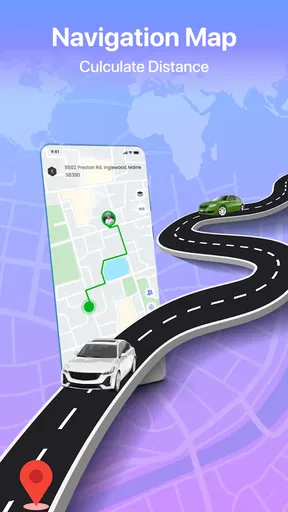
Compared with a conventional navigation app, this is a more focused choice: the appeal is locating a phone and coordinating live whereabouts, not planning a route as the main event. If your priority is turn-by-turn directions, traffic-aware trip planning, or exploring a map, a dedicated navigation service is likely the better fit. If your need is to check where a trusted person or device is, a locator can be more direct than opening a broader map app and working around tools designed for travel.
There is also a difference between a phone-finding utility and a shared-location service. A built-in device locator may be the better first option when you only need to recover your own missing handset, especially if you already use its account ecosystem. A shared tracker is more relevant when several people need to coordinate. I would compare the effort of inviting and setting up your group with whatever tools they already use; an app that nobody else wants to open will not improve coordination, even if its feature set sounds appealing.
For someone deciding whether a paid item is worthwhile, the key question is not whether it adds another feature but whether it removes a recurring hassle. If you only need occasional location checks, the free starting point may be enough. If an optional purchase is connected to a specific routine you will use often, weigh that convenience against the listed per-item cost before buying. The app’s free status does not mean every possible use is free, so checking the purchase screen carefully is a sensible step.
Everyday situations and practical checks
Picture a busy afternoon: you leave home in a hurry, meet someone across town, and later realize you cannot remember whether your phone came with you. A locator is most valuable when you have already completed setup and know how to open it; waiting until the phone is missing is a poor time to learn the controls. I’d test the account and location workflow while the device is in hand, and make sure the people you may need to coordinate with can use their side of the arrangement too.
Before relying on any live-location app, check the basics that affect a real outing: the phone has power, location access is enabled as intended, and the person you expect to see has agreed to share. Location-based tools depend on the phone and its settings, so I would not treat an app as a guaranteed safety system or an emergency service. For a time-sensitive pickup, a quick message or call remains a useful backup if a location does not update when expected.
One non-obvious trade-off is that location convenience asks for ongoing attention to privacy and battery use. The previous testing experience here was reassuring on battery drain, but I would still avoid sharing continuously when a short session will do. Review who has access from time to time, especially if a family arrangement or friendship group changes. Being deliberate about access is part of using a tracker well, not a reason to avoid one altogether.
Who is likely to get value—and who should pass
I can see this working for people who regularly coordinate arrivals, families who want a simple way to check agreed locations, and anyone who wants location history as a possible aid when retracing a route. It may also suit someone who prefers a dedicated locator interface over finding location tools inside a broader service. Its short description and category point toward that focused use, while the listed 500K+ installs suggest that many people have tried it; the average rating is 3.4 from 614 ratings, so I would approach it with measured expectations rather than assuming it will suit everyone.
I would skip it if you want a full navigation replacement, dislike sharing location, or need a tracker to work without the people and devices involved cooperating. It is also not the right choice if you expect a free install to mean every optional feature has no cost. The app is rated for Everyone, but that age classification does not answer a family’s own questions about consent, supervision, or what location sharing is appropriate for a child. Those decisions still belong to the people using it.
Version 1.0.8 is the current version, and the app was released on Nov 30, 2025. Those details are useful context when deciding whether to try it, but I would still judge it by whether its actual setup and location-sharing flow work for your group. The number of reviews is small at five, which gives less written feedback to help anticipate individual experiences, so a careful trial of the free access is more informative than relying on a handful of opinions.
Final Thoughts
In a world where our phones are practically extensions of ourselves, having a trusty locator app is a no-brainer. It delivers on its promises with flying colors. It's easy to use, packed with useful features, and performs reliably under various conditions.
If you’re on the hunt for a phone locator app that ticks all the right boxes, this one’s worth checking out. It’s like having your own personal detective, minus the trench coat and magnifying glass. I’d say give it a whirl and see how it fits into your digital life. You might just wonder how you ever lived without it!
My verdict is to try it if your main need is practical phone location or consensual live sharing, and to keep your expectations specific. The no-cost entry makes an initial test reasonable, while the $9.99 per-item purchases mean I would confirm the value of any extra before paying. For route planning, a built-in phone recovery tool, or people who do not want location sharing, another option will make more sense. For a group willing to use it thoughtfully, this is a focused tool worth testing rather than an automatic must-have.
Pros
- Accurate location tracking for peace of mind.
- User-friendly interface for easy navigation.
- Real-time updates ensure current location data.
- Customizable alerts for specific areas.
- Battery-efficient tracking to save power.
Cons
- Requires internet connection for updates.
- Limited features in the free version.
- May drain battery with constant use.
- Privacy concerns with location sharing.
- Ads can be intrusive in free version.
FAQs for Geo Tracker - Phone Locator
How accurate is Geo Tracker - Phone Locator in providing location data?
Geo Tracker - Phone Locator is designed to offer highly accurate location data by utilizing GPS technology. However, accuracy can vary depending on factors such as the user’s environment (urban areas with tall buildings may interfere with GPS signals) and the strength of the internet connection. Users typically find it reliable for both urban and rural navigation.
Does Geo Tracker - Phone Locator require an internet connection to function?
While Geo Tracker - Phone Locator primarily uses GPS for location tracking, an internet connection enhances its functionality, such as updating maps and location sharing features. Offline mode is available, but certain features like real-time updates and sharing your location with others may not work without internet access.
Is user data protected when using Geo Tracker - Phone Locator?
User privacy is a priority for Geo Tracker - Phone Locator. The app employs encryption to protect user data during transmission. Additionally, users have control over who can view their location. It is recommended to review the app’s privacy policy to understand how data is collected, stored, and used.
Can Geo Tracker - Phone Locator be used for family or group tracking?
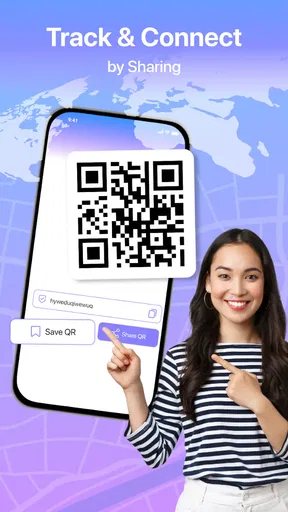
Yes, Geo Tracker - Phone Locator supports family and group tracking. Users can create groups to share their location with family members or friends. This feature is particularly useful for coordinating activities or ensuring the safety of loved ones. Users can manage group settings to control who can see their location.
What features does Geo Tracker - Phone Locator offer besides location tracking?
Beyond basic location tracking, Geo Tracker - Phone Locator offers features such as route history, customizable alerts for entering or leaving specified areas, and SOS alerts for emergencies. Users can also access detailed maps, set waypoints, and even share routes with others, making it a versatile tool for navigation and safety.


